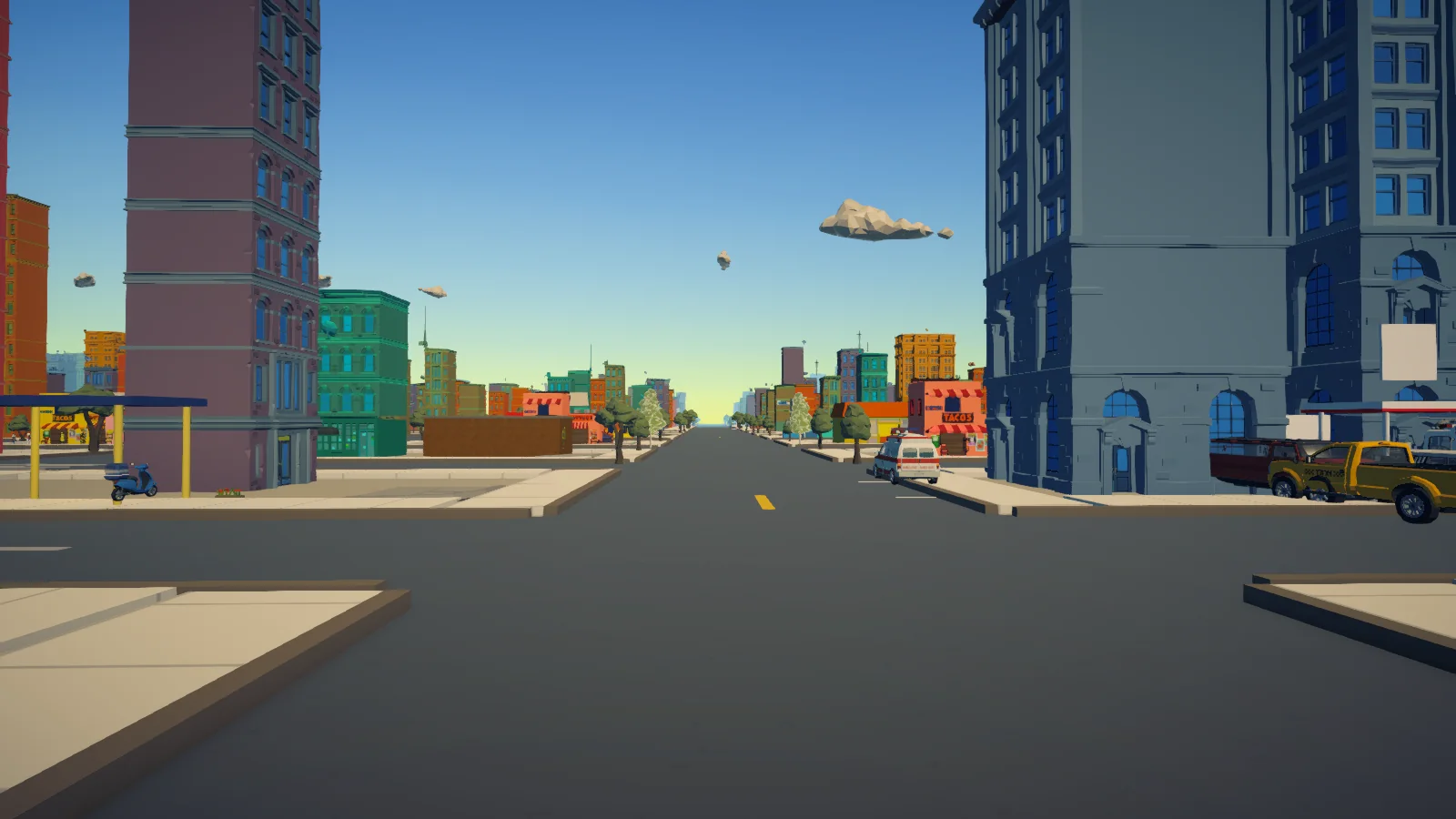
Brainbaby Labs has committed $1.3 million to Craze City, a mobile real-life simulator game. The investment funds the build-out of the game's persistent world backend, its economy systems, and the content pipeline needed to run a live game rather than ship a static one. Craze City joins the Brainbaby Labs portfolio alongside Brainbaby AI, Cardboom, Lifepack, Yapzy, and Brainy Bytes — and it is the first title in the portfolio built for the games market.
Craze City is a real-life simulator. Players land in an open city and build a life in it: take a job, earn money, rent or buy property, start a business, buy and modify cars, and climb from nothing to controlling a meaningful slice of the city's economy. It is the life-sim loop that has sustained open-world games for two decades, rebuilt for a phone — short sessions, touch-first controls, and a world that keeps running when you close the app.
The economy is the spine of the game. Prices are not set by a designer in a spreadsheet; they move with what players actually do. Jobs pay based on how many players are working them, property appreciates in districts players are investing in, and goods get expensive when supply dries up. A player-driven economy is the hardest system in this genre to get right and the one that determines whether a simulator holds an audience for years or empties out in a month. A large share of the $1.3M is going into exactly this: the simulation backend, the anti-inflation and sink mechanics, and the anti-cheat and market surveillance work that keeps a real economy from being farmed to death by bots.
Cars are the second pillar. Craze City treats vehicles as a progression system rather than set dressing — earn your way from a beaten hatchback to something worth insuring, then tune it, paint it, race it, or flip it on the player market. Cars are the most reliable status object in a life simulator, and they give the economy a high-value goods tier that players actually want to grind toward.
Zombie outbreak events are what make the city unpredictable. At intervals, districts go into outbreak. Streets that were safe commuting routes become dangerous, supply chains for certain goods break, property values in affected districts fall, and a whole set of temporary jobs and markets open up for players willing to work the crisis. Outbreaks are designed as an economic shock, not just a combat mode — the point is that the market reacts, and players who read the city well profit from it. It gives a life sim the thing life sims usually lack: genuine volatility.
The category thesis is straightforward. Mobile is where the largest games audience is, and the life-simulator and open-world-sandbox categories on mobile are dominated by titles that are either a decade old or thin reskins of the same loop. There is room for a simulator with an economy that is genuinely player-driven and a live-events layer that changes the world week to week. That is a live-operations product, not a one-time launch, which is why the funding is structured around sustained development rather than a single ship date.
Technically, the hard part is persistence. A world where property ownership, business inventories, market prices, and district states all survive between sessions — and stay consistent across every player in the city — is a distributed systems problem before it is a game problem. It needs authoritative simulation on the server, tight client prediction so the game still feels responsive on a phone with variable connectivity, and an economy pipeline instrumented well enough that designers can see an exploit forming before it drains the market. This is the same engineering discipline Brainbaby Labs applies to its fintech and marketplace work, pointed at a game.
Craze City also fits the wider portfolio logic. Brainbaby Labs builds systems where value moves between users: card and crypto rails in Cardboom, a curated marketplace in Yapzy, credit-based billing in Brainbaby AI. A simulated economy is the same problem with the stakes moved inside a game world — matching, pricing, liquidity, fraud, and sinks. The team's experience shipping real payment and marketplace infrastructure is a direct advantage in building a virtual one.
Development is underway. Craze City will appear in the Brainbaby Labs portfolio as an in-development title until it ships, and we will publish build updates, economy design notes, and technical write-ups here as the work progresses. For partnership, publishing, or investment enquiries relating to Craze City, get in touch with Brainbaby Labs.