05 / Custom software
Custom Software Development
Software shaped around the way you work.
A new platform, a connected workflow, or an existing product that needs to evolve. We bring design and engineering together to define the right next release.
- Work
- New products and existing systems
- Disciplines
- Product · Design · Engineering
- Start
- Discovery or a bounded milestone
One product. Clear responsibilities across the whole system.
Owned-product example / Baby Astro
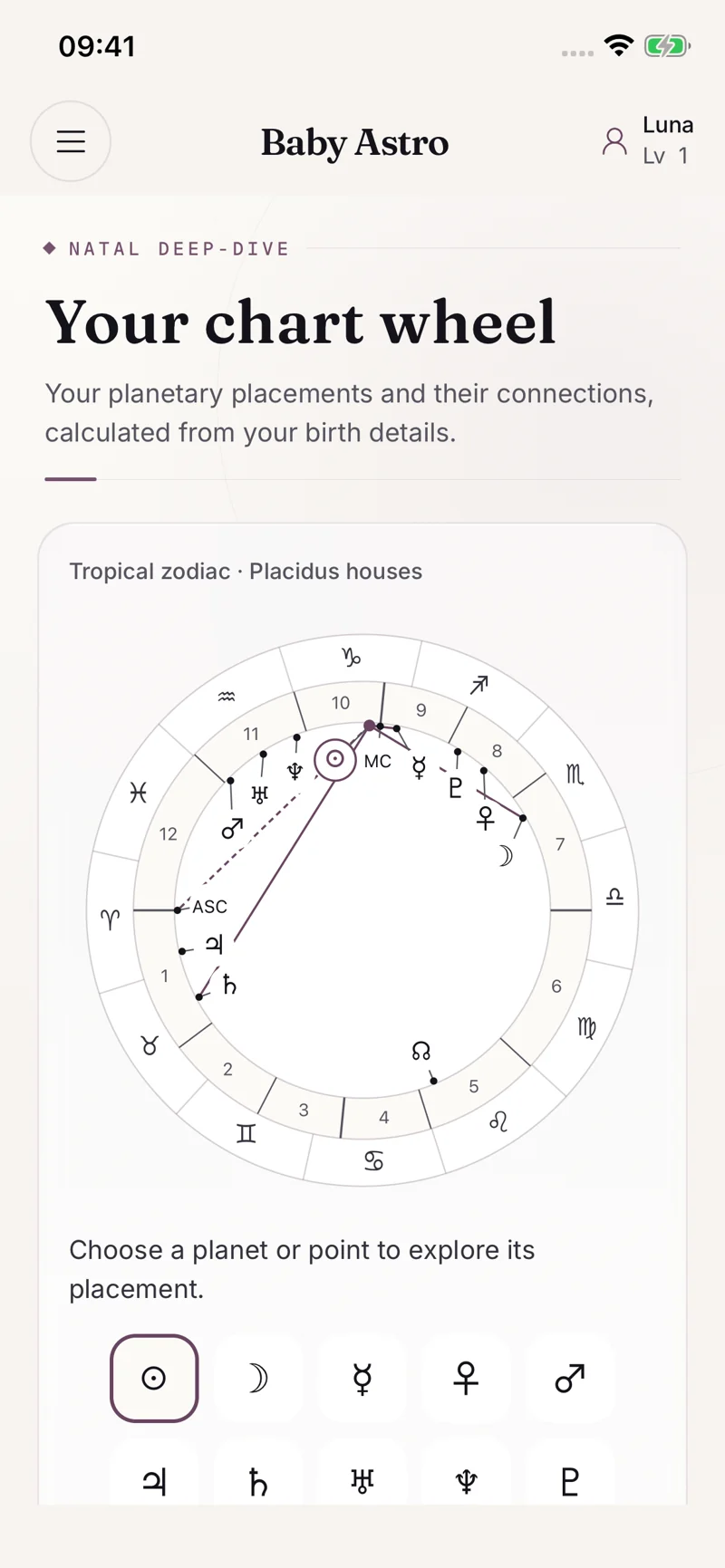
Inspect the product behind the service.
Review the interface, then use the case study to discuss the workflow and the systems behind it. These are our portfolio products; your project needs its own scope and acceptance criteria.
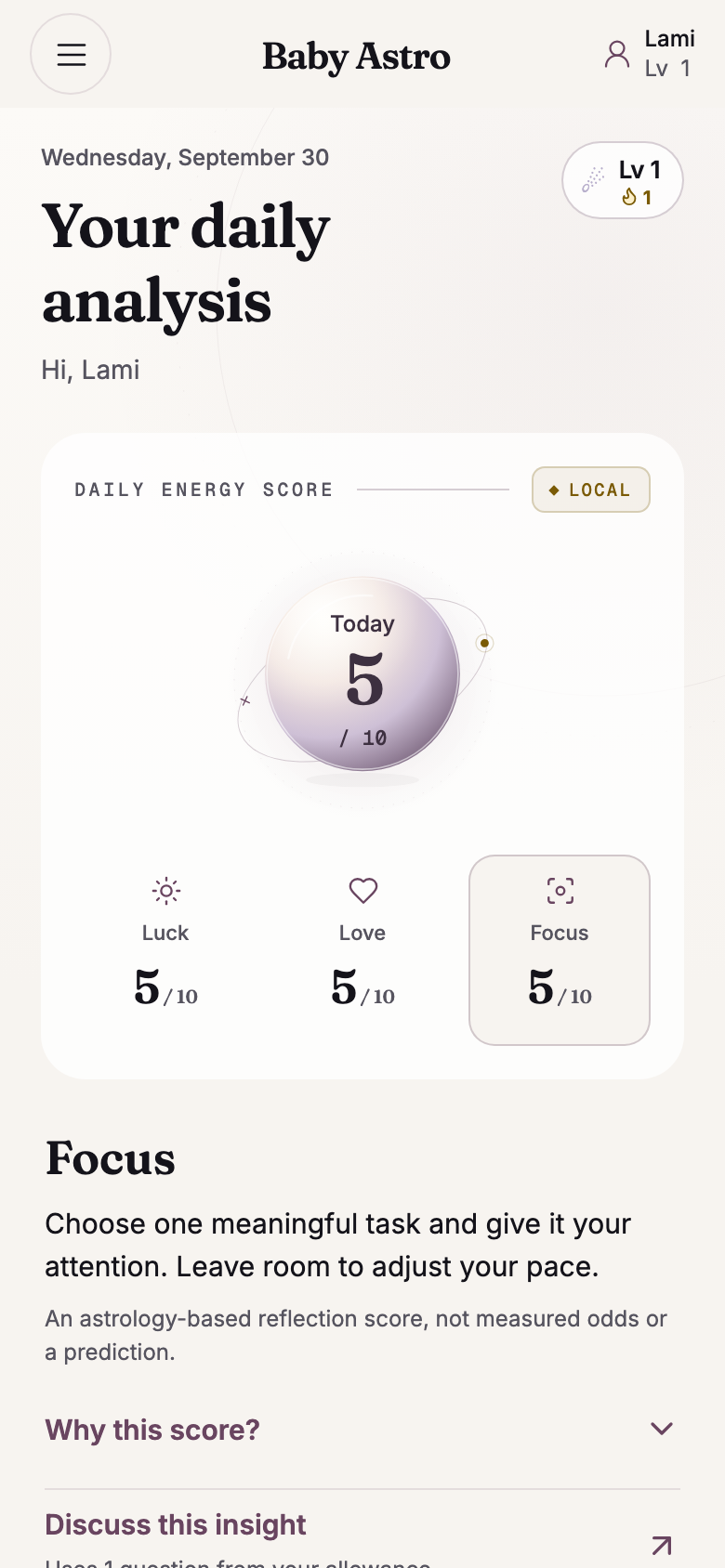
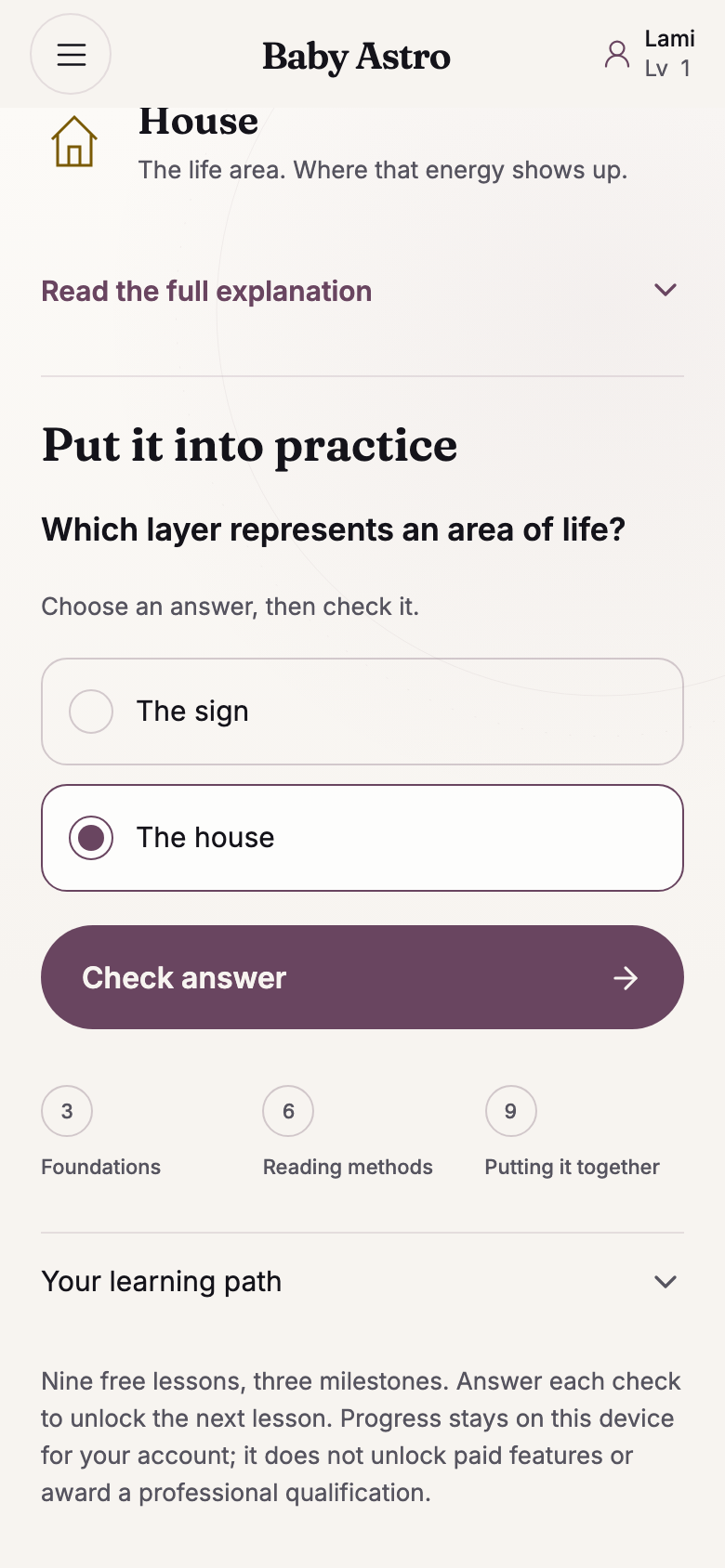
Daily analysis, lesson and quiz: Expo web QA, 30 September 2026, with synthetic data. Chart and menu: September iOS demo captures. Development previews are separate from store availability.
Browse screen captions and originals · Baby Astro
Daily analysis, lesson and quiz: Expo web QA, 30 September 2026, with synthetic data. Chart and menu: September iOS demo captures. Development previews are separate from store availability.
Define the business outcome
We start by understanding the people using the software, the current process, and the outcome you want to change. A first release should have a clear purpose and a scope the team can evaluate. Existing systems, data, and commercial constraints inform the plan.
The engagement may cover product discovery, experience design, web or mobile development, AI integration, and backend engineering. We agree which disciplines are needed for the task rather than treating every project as the same package.
- A product brief and prioritised release scope
- Workflow and interface design
- Implementation and integration
- Testing, deployment, and handover
Keep delivery understandable
Working milestones, regular reviews, and explicit acceptance criteria make progress visible. The proposal identifies the team, responsibilities, assumptions, dependencies, and how changes to scope will be handled.
You should know which decisions are needed from your team and what happens after a release is accepted. Maintenance, support, hosting, and future development are discussed as operating responsibilities, with scope and terms documented.
Ownership is part of the project
Before work begins, agree the handling of source code, designs, project accounts, data, and third-party components. At handover, documentation should give the next person enough context to operate and change the system.
Explore our owned-product case studies to see the kind of product work behind Brainbaby Labs. For a client proposal, we will discuss the relevant experience and the people available for your specific project.
Brainbaby Labs / 01 → 04
Modernise existing software in stages.
A redesign can change the interface while the business still depends on older software. Explore the decisions behind a staged replacement before defining your first milestone.
Repair, migrate or rebuild your application?
Repair the existing application+Consider a focused repair when the workflow still fits the business and the problem can be reproduced.
- First evidence to gather
- Bring an example of the failure, recent changes and the affected integration. Confirm source access and who can deploy.
- Before approving the change
- Agree a regression check for the repaired journey and the behaviour that must remain unchanged.
Migrate hosting or infrastructure+Consider a hosting move when the application still fits, but its runtime, provider or operating requirements need to change.
- First evidence to gather
- Inventory services, data, background jobs and dependencies. Establish a baseline for workload, cost and restoration.
- Before approving the change
- Test the new environment and data recovery. A hosting move alone does not fix application rules or guarantee lower bills.
Rebuild a bounded workflow+Consider replacement when the present design prevents a needed change. Compare a limited replacement with a whole-system rewrite.
- First evidence to gather
- Choose one business journey and record its data, permissions and integration contracts. Check whether old and new can coexist.
- Before approving the change
- Define acceptance and data reconciliation before cutover. Plan recovery after new writes and the cost of running both paths.
Map dependencies
List the workflows people rely on, the records they use and the systems they connect to. Identify account owners and the behaviour a replacement must preserve.
Replace one flow
Choose a bounded journey that can be reviewed alongside the existing product. Examine how old and new components connect before deciding whether staged replacement is practical.
Compare results
Use agreed examples to compare records, permissions and outcomes. Include interrupted work and repeated requests. A working new screen is only one part of acceptance.
Release & recovery
Define the release owner, observation window and conditions for stopping. Rehearse recovery of both software and data; returning to an older interface may not undo new writes.
Illustrative planning walkthrough. It does not run a migration or guarantee zero downtime. Access, data changes and recovery need a plan for your actual system.
Before we build
Questions before starting your project.
What should a first custom software milestone deliver?
Choose a complete user journey with a clear business purpose. The milestone can cover the interface, application rules and integrations needed for that journey. The proposal should identify deliverables, dependencies, review points and acceptance criteria so your team can judge working software before expanding the scope.
How do you estimate software development cost and timing?
An estimate follows the user roles, workflows, existing systems, integrations and release requirements. Share your brief or current application so we can discuss the unknowns and a first milestone. The written proposal sets out assumptions, exclusions and the process for scope changes; a general price range is not a project quote.
Who owns the source code, designs and service accounts?
The project agreement defines source code, design files, data, accounts and third-party components. Handover should include the context needed to operate and change the system. Hosting, monitoring, maintenance and support responsibilities are scoped explicitly rather than assumed to be included in every build.
From planning to a useful conversation
Your software project brief template
Define the first release before comparing proposals. Write what you know, leave open questions visible, then download a brief you can edit and share with a development team.
Review your brief
Brainbaby Labs — Your software project brief template

Main project type: Custom Software Development

1. Outcome
What problem should improve, and how will you recognise improvement?
To be discussed

2. Users and access
Who uses it? Which roles, devices or accessibility needs matter?
To be discussed

3. One complete first-release journey
From the first action to a useful result, including waiting and recovery.
To be discussed

4. Existing systems and integrations
What already exists? Who owns access? What still needs investigation?
To be discussed

5. Release and budget constraints
Target window, platforms, spending limit and known dependencies.
To be discussed

6. Acceptance and ownership
What demonstration proves completion? Who owns accounts, code and operations?
To be discussed

Questions to resolve with the development team
- Agree deliverables, exclusions and acceptance criteria.
- Separate build costs from hosting, provider usage and support.
- Record ownership, handover and responsibilities after launch.

Discuss this project carries your brief to the form in this tab, using browser storage for up to 30 minutes. Review and submit it yourself; nothing is sent yet. Use non-sensitive examples. Download a copy before leaving.
Discuss this project carries your brief to the form in this tab, using browser storage for up to 30 minutes. Review and submit it yourself; nothing is sent yet. Use non-sensitive examples. Download a copy before leaving.
Start a conversation
Tell us what you’re building
Share the outcome you need, the systems involved, and the constraints you already know. We’ll use that to discuss the right next step.
Start a project enquiry reach@brainbaby.ai See how engagements start