A trading card marketplace has to describe a physical item accurately before it can sell it. The game, set, card number, language, finish and condition determine what a buyer is comparing. Marketplace development connects that identity to a seller’s listing, an order and the operations that follow.
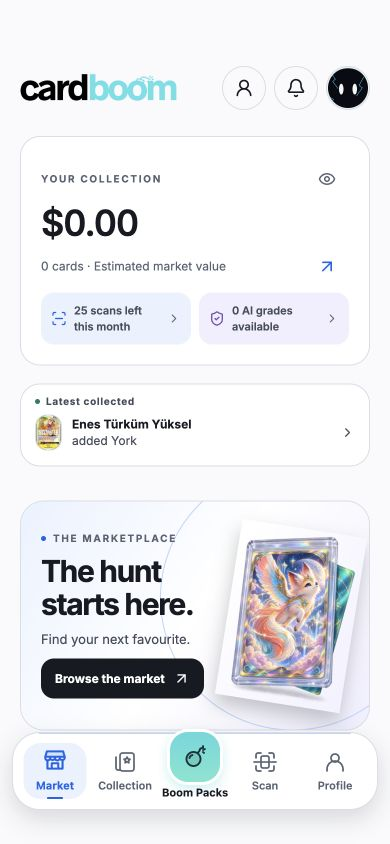
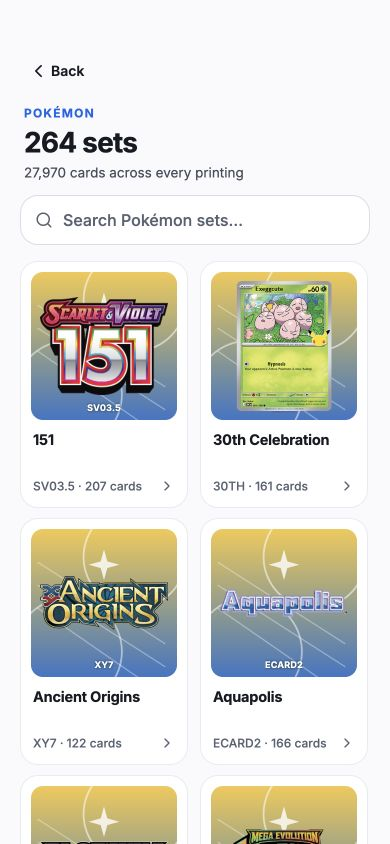
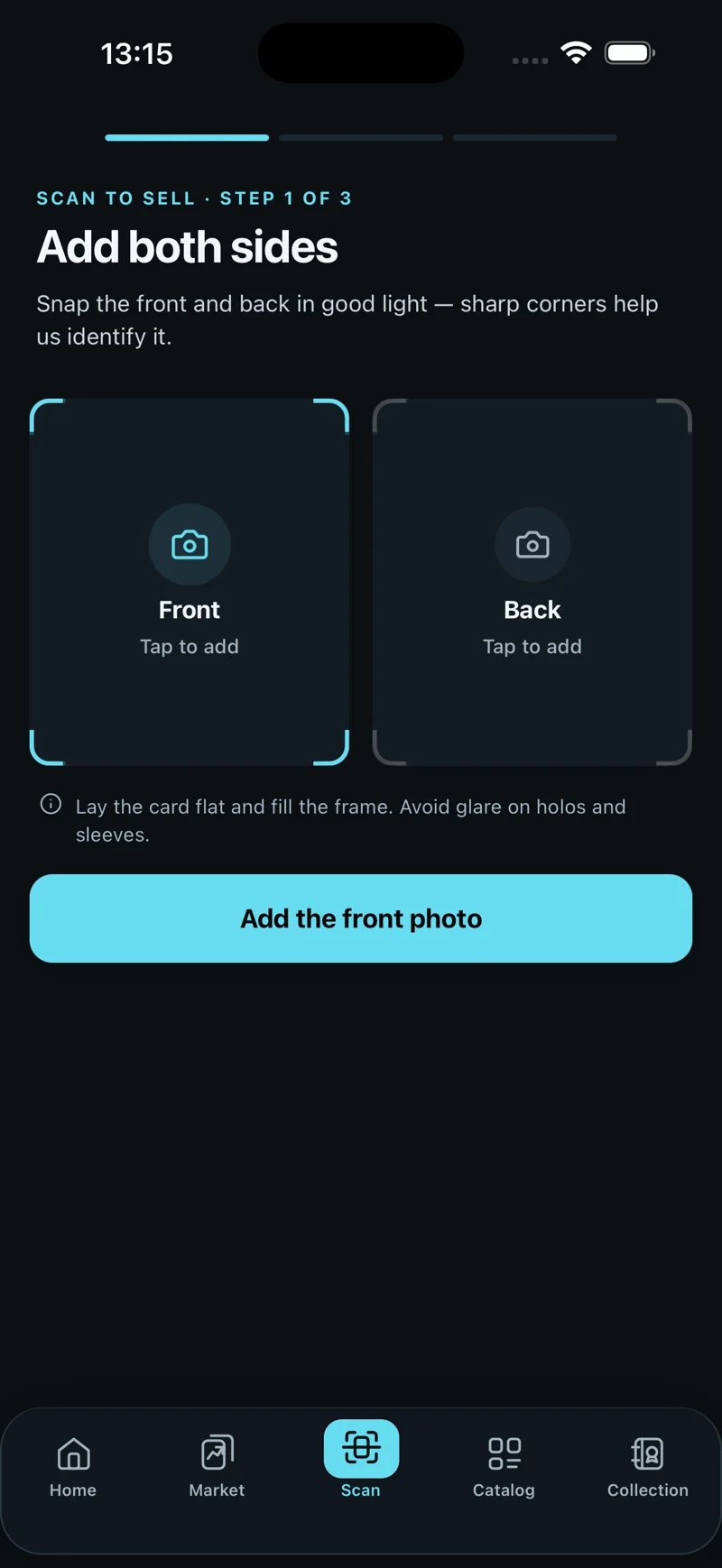
This guide helps founders, card dealers and collector communities prepare a software brief. It covers scan-assisted identification, condition evidence, price context, auctions, payments and handover. Cardboom is a Brainbaby Labs owned-product example. Its interface captures illustrate product work; they do not prove every proposed commercial workflow is available or completed.
Separate the card printing from the seller’s physical copy
A catalogue entry identifies a printing; a listing describes one seller’s item. Keep set, number, language and finish in the catalogue, then attach condition, photographs, asking price and availability to the listing. Two copies of the same printing can have different condition and different sellers.
If you include a card scanner, let the collector confirm the proposed match before listing. Provide a manual correction route when the image is unclear or the catalogue has several variants. Condition assistance is distinct from third-party certification; record the grading organisation and certificate when a seller supplies them.
Give price comparisons their dates and evidence
Distinguish an asking price, a recorded completed sale and an estimate. A useful comparison identifies the printing, condition or grade, currency, sale date and source. State how shipping and fees are treated. If there are too few comparable sales, show the gap rather than a confident value.
A sale of one copy does not establish a market-wide index. Let buyers inspect the source and let administrators correct a mismatched sale without silently rewriting its history. Budget for data permissions, source availability and update responsibilities as part of the platform scope.
Decide whether the first release needs fixed prices or auctions
Begin with one complete buying journey. Fixed-price listings need availability checks and a rule for competing buyers. Auctions add bid increments, an authoritative end time, winning-bid handling and a clear response to late or invalid bids. Specify these rules before estimating both modes together.
Ask the development team to demonstrate two people attempting the same item, repeated submissions and an interrupted connection. The server must decide the outcome; the interface should explain whether an action was accepted, rejected or remains pending. Include the seller and support views in acceptance.
Define payment, delivery and custody as separate responsibilities
Agree who receives the payment, pays the seller, handles refunds and responds to disputes with the selected provider. A return from checkout is not sufficient evidence of a settled payment. Provider events can be delayed or repeated, so reconciliation and duplicate handling belong in the delivery plan.
Specify dispatch, tracking, delivery evidence and the route for a disputed item. Holding cards in a vault adds receipt, inventory reconciliation, release and custody responsibilities. Keep vaulting, grading submission and alternative payment methods as separately scoped integrations until their operators and acceptance evidence are agreed.
Estimate the first milestone from its hardest dependency
A focused first release might cover one card category, seller onboarding, confirmed listings, search, one purchase method and an operations view. Validate catalogue access or the payment integration early. Choose web, iOS and Android delivery deliberately; launching every channel at once adds acceptance and release work.
Ask the proposal to separate design and build from data licences, provider usage, hosting and ongoing support. Record assumptions and exclusions for scanner accuracy, auction behavior and third-party services. A portfolio screenshot is a useful conversation starter, not a fixed price or a promised delivery date.
Keep a record that operations can reconcile after launch
Model catalogue entries, physical items, listings, bids, orders and provider events separately. Preserve the identifiers that connect them. An operations team should be able to trace what happened to an order, why inventory changed and which action is safe to repeat.
Define access roles, monitoring, backup and recovery checks, incident handling and handover before launch. Demonstrate a failed dependency and its recovery as well as a successful purchase. Agree who owns source code, designs, service accounts and catalogue data rights, and who supports the next release.