Separate a card from a sale
One catalogue entry can relate to several listings. Condition, seller, asking price, and availability belong to the specific listing, while the card’s identity belongs to the catalogue.
Owned-product case study / Marketplace & infrastructure
A trading-card marketplace connects detailed catalogue information with the decisions collectors make. Cardboom brings discovery, collection management, and trading workflows into one product.
Discuss your projectRelease review · 3 October 2026: marketplace card checkout and paid Boom Packs are not enabled. The new catalogue and navigation screens are local previews; store availability is separate.
Published product / Android
Published by Brainbaby Labs. Explore the app listing and store screenshots.
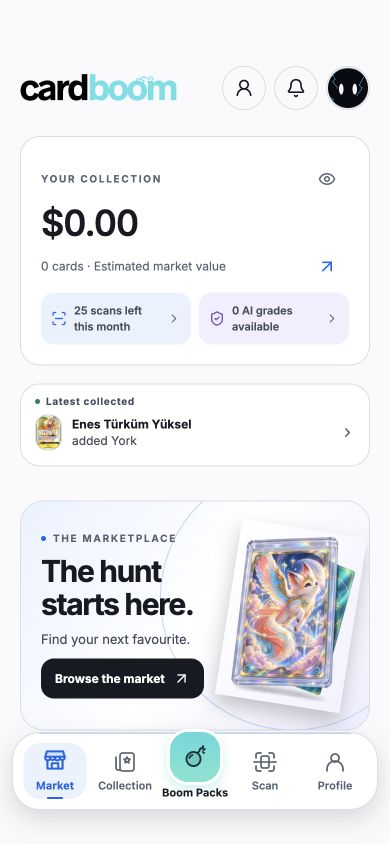
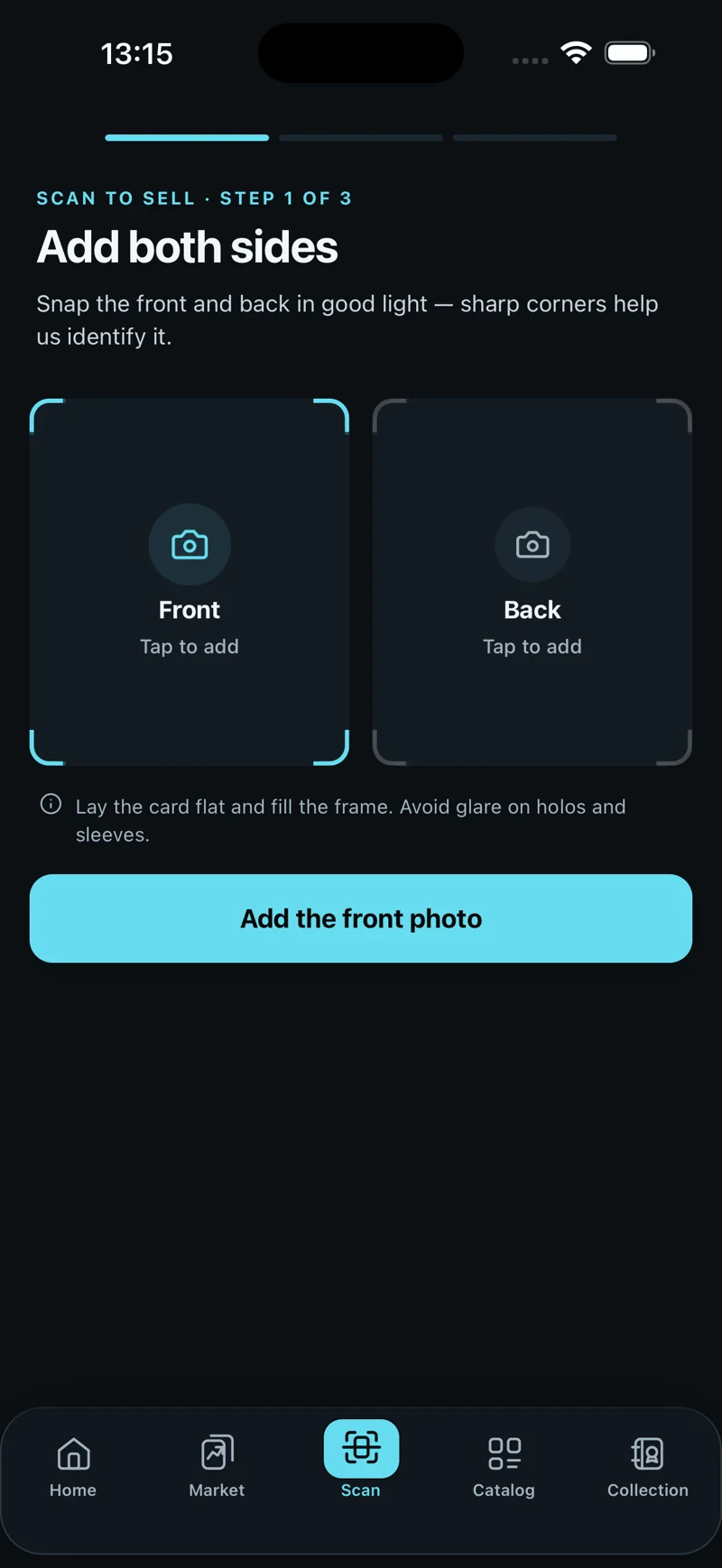
Collector home, catalogue and set completion: 2–3 October 2026 web previews. Other screens: earlier native captures. Displayed estimates are not completed sales; feature availability varies by release.
Catalogue design / 2 October 2026
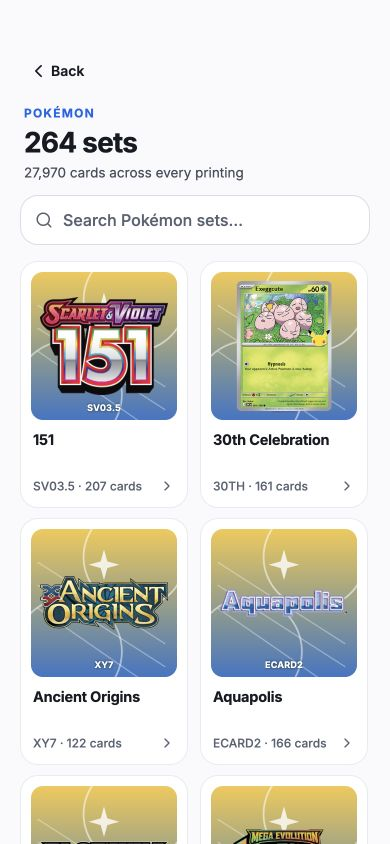
Cardboom’s updated browsing journey moves from a game to its sets, then to the cards in a chosen set. These actual browser previews show how product design and data structure work together.
Set artwork, names and search help collectors narrow the catalogue before opening a card grid.
The reviewed source groups records by game and normalized set name, while retaining source names and codes. A shared code alone does not identify a set.
The implementation uses bundled set metadata for the initial view, then refreshes the list online. Card artwork loads separately; it is not all shipped inside the app.
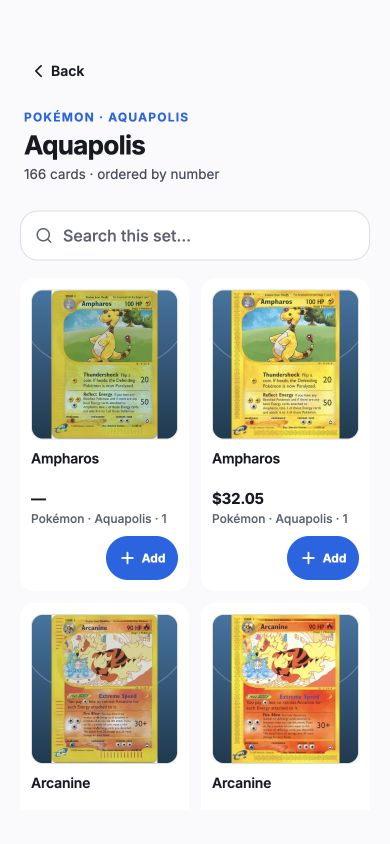
Dated Expo web previews, separate from the native captures above. Counts and prices record this interface snapshot; they are not current coverage totals or completed-sale records. This section does not establish store approval, native-device behavior or production performance.
Dated Expo web previews, separate from the native captures above. Counts and prices record this interface snapshot; they are not current coverage totals or completed-sale records. This section does not establish store approval, native-device behavior or production performance.
Collector experience / 3 October 2026
The new Boom Packs interface presents curated bundles with their card identities and a route back to the catalogue. The five-part dock keeps Market, Collection, Boom Packs, Scan and Profile together. This is a product-design preview of transparent physical-card commerce.
Recorded local interface preview. Displayed values are catalogue estimates, not completed sales or an offer to purchase this bundle. Paid pack checkout is disabled; stock, payment and fulfilment readiness are separate release requirements.
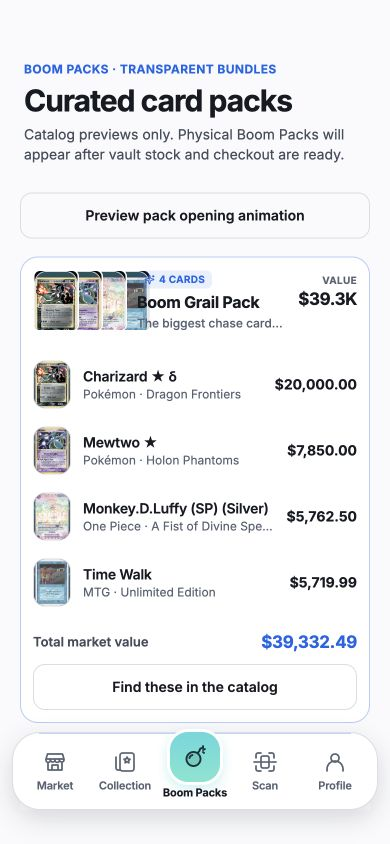
Recorded local interface preview. Displayed values are catalogue estimates, not completed sales or an offer to purchase this bundle. Paid pack checkout is disabled; stock, payment and fulfilment readiness are separate release requirements.
Delivery evidence / Reviewed 19 September 2026
The pricing interface distinguishes listing data from market estimates and represents source and confidence. Collectors can inspect the context behind a price while exploring a catalogue item.
This describes the reviewed implementation. Screenshots may show an earlier release; production availability is confirmed during a product walkthrough.
Under the surface / Product engineering
Cardboom connects structured card information with listing and collecting journeys. Its application distinguishes the catalogue entry, the seller’s item, and the marketplace action.
The upload workflow moves through image selection, quality review, analysis, and results. The collector reviews the card information before continuing.
Simplified product flow, based on an implementation review in September 2026.
One catalogue entry can relate to several listings. Condition, seller, asking price, and availability belong to the specific listing, while the card’s identity belongs to the catalogue.
The catalogue model carries price source, update time, confidence, and listing information. Those fields give the interface a way to distinguish an estimate from an available offer.
The image workflow includes quality and result stages. A useful recognition experience gives the person a chance to inspect the identified item before preparing the next action.
Observed implementation scope
A focused product walkthrough
Cardboom × Brainbaby AI / 01.10.2026
Cardboom’s collector assistant opens from the mobile home screen. In the recorded iOS QA session, a follow-up asking how to store a holo card returned the answer shown here.
The reviewed implementation separates the mobile interface from access checks and AI-provider credentials on the server. It handles unavailable responses and tells users to check AI answers and avoid private information.
Discuss an AI integration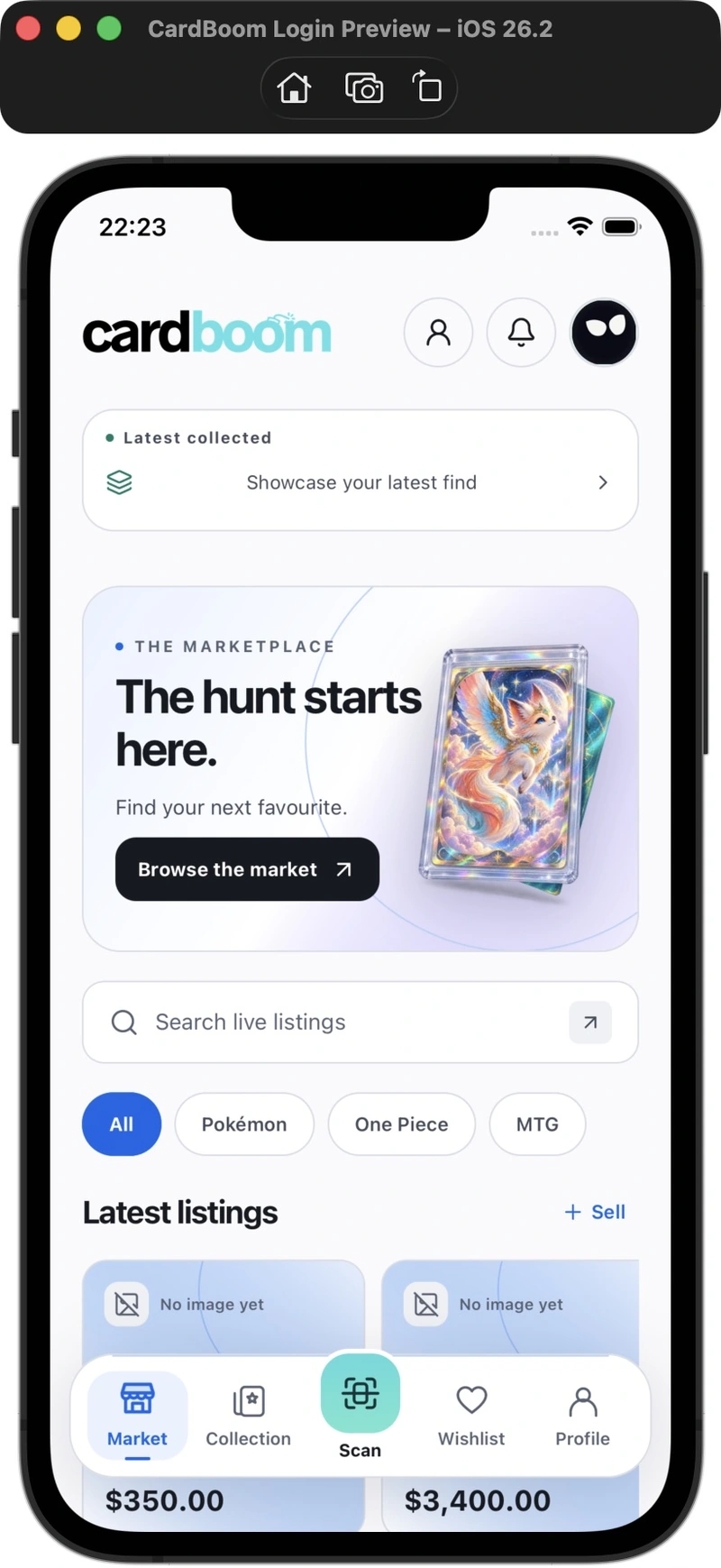
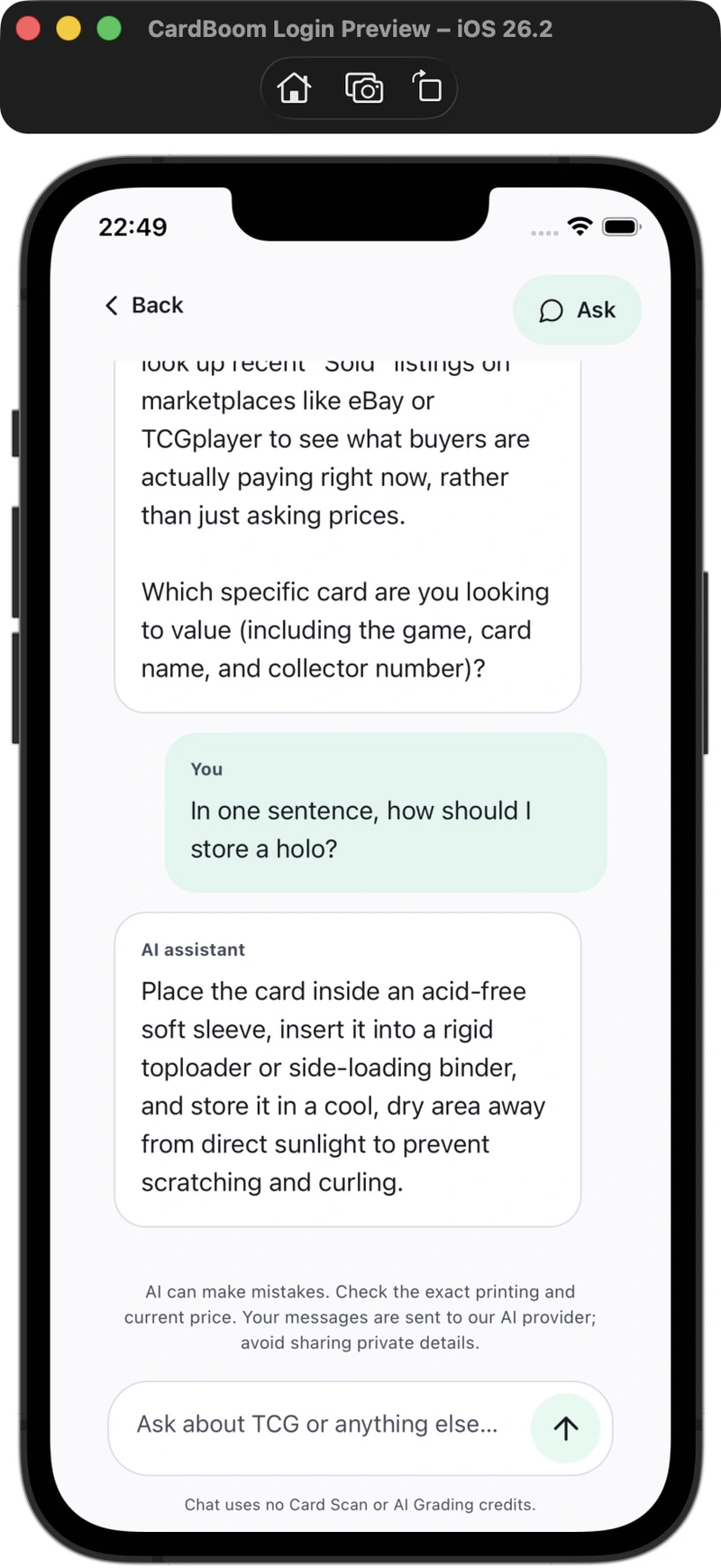
iOS release-simulator captures, 1 October 2026. Internal testing evidence; not proof of public store availability, physical-device acceptance or answer accuracy. The original simulator window and app content are preserved.
iOS release-simulator captures, 1 October 2026. Internal testing evidence; not proof of public store availability, physical-device acceptance or answer accuracy. The original simulator window and app content are preserved.
Collectors need to identify what they have, understand the available information, and find the next relevant action. A marketplace also needs to distinguish browsing, managing a collection, and buying or selling.
Those are different jobs. The product experience should connect them without making the user repeatedly enter the same information or lose their place in the catalogue.
Cardboom’s portfolio screens show a multi-game catalogue, collection and marketplace interfaces, and scanning workflows. Older captures display a 109k-card catalogue. That is a historical interface figure, not the current catalogue total, active sellers or transaction volume. The separate dated October previews show newer catalogue and pack-navigation designs.
The product proposition also includes auctions, buy-now listings, portfolio tracking, and grading submissions. These interfaces and product plans are distinct from an enabled payment flow. Photo-based condition estimates are not physical grading certification.
A marketplace brief must connect the interface to catalogue data, account permissions, listing state, and transaction events. Buyers should ask how duplicate requests, failed payments, and changing availability are handled.
These are the questions we bring to an infrastructure discussion. The public screens demonstrate the product experience; a detailed implementation proposal needs its own architecture review, system boundaries, and test plan.
Start with one complete journey, such as identifying an item and preparing a listing. Define the data and integrations needed at each step. We can then assess the web, mobile, and backend work required to make that journey usable.
Start a conversation
Share the outcome you need, the systems involved, and the constraints you already know. We’ll use that to discuss the right next step.
Start a project enquiry reach@brainbaby.ai See how engagements start