In-house versus outsourced software development is a decision about who builds, approves and operates your product. It applies to a mobile app, a business web application and the APIs and cloud infrastructure behind them. Compare the same first release across each delivery model before choosing a team or comparing a price.
A supplier proposal and an internal hiring plan often cover different things. Write one brief with users, the first complete workflow, existing systems and acceptance criteria. Include the work after launch. A lower initial build cost is only useful if you understand the responsibilities and recurring costs that accompany it.
Inspect relevant software before comparing delivery models
Ask an external company to show a workflow comparable to yours and explain its contribution. For an internal team, check whether the people available can cover the same interface, backend, integrations and release work. Product screens are a starting point for questions, not proof of a supplier’s delivery speed or your future commercial results.
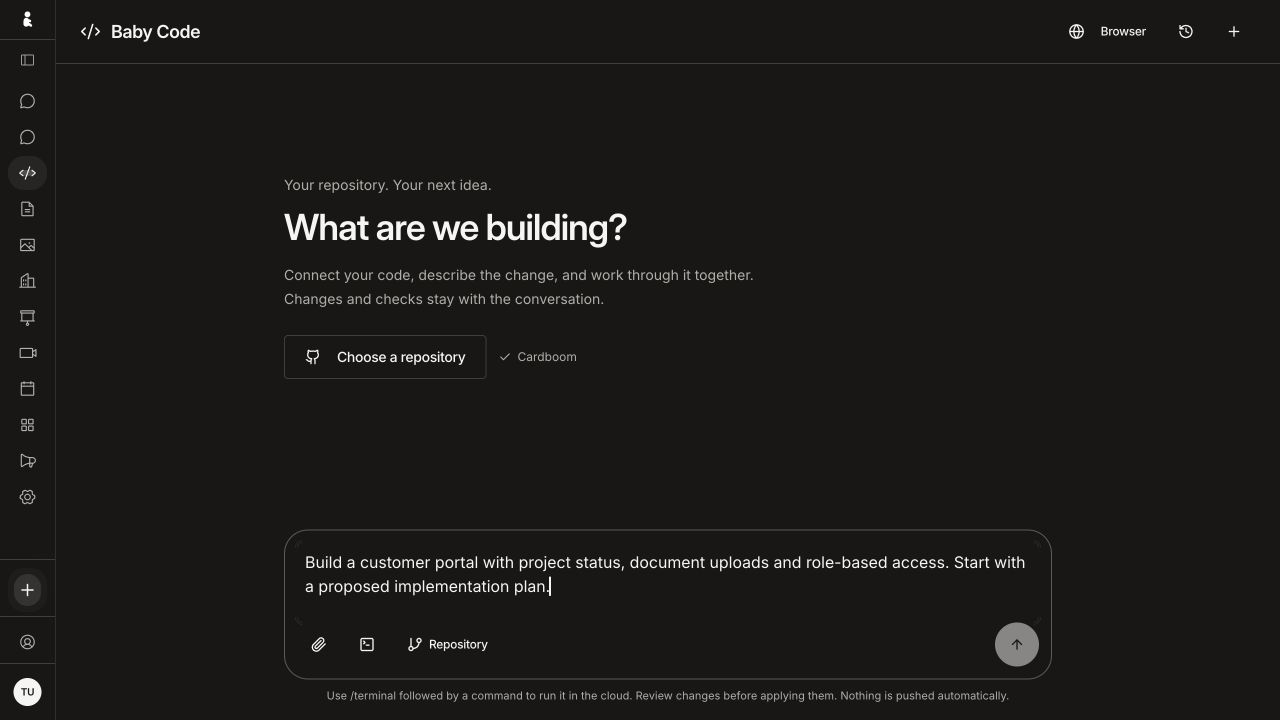
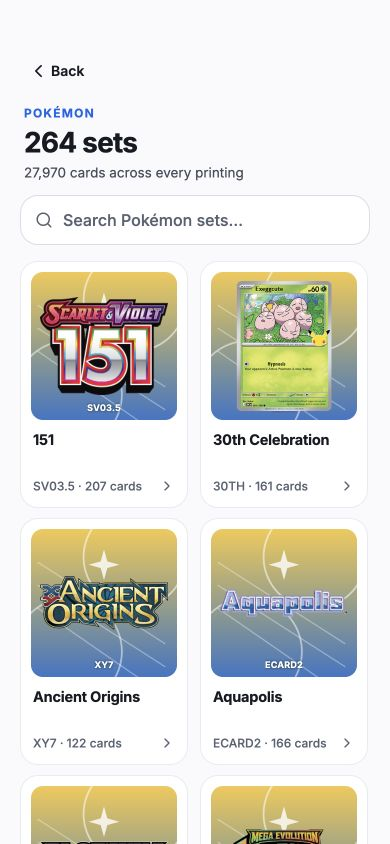
The examples below are Brainbaby Labs’ owned products. Baby Astro shows a mobile learning interface, Brainbaby AI shows a browser workspace, and Cardboom shows catalogue discovery. The case studies distinguish interface captures, preparation screens and engineering context. Ask to review the architecture, test evidence and handover relevant to your own project before committing.
From our portfolio
See the products behind the guides.
Explore three products built, owned and operated by Brainbaby Labs. Start with the interface, then review the case study for the product decisions and engineering context relevant to your project.
Mobile applications

Baby Astro
Review how Baby Astro brings chart navigation, learning and daily insights into a mobile experience.
Web applications and AI
Brainbaby AI
See how Brainbaby gives coding and presentation work their own browser workspaces.
Catalogues and connected systems
Cardboom
Explore Cardboom’s catalogue journey and the engineering decisions behind its collector tools.
These are owned-product examples. Screens show the documented interface versions; the case studies explain their capture context and the scope of the engineering review.
When an in-house software team fits
An internal team can suit a product that requires frequent decisions informed by knowledge held inside your organisation. Your organisation then needs the capacity to recruit, lead and retain the people responsible for delivery. Having engineers on payroll does not automatically cover product design, quality review, release operations or support.
Include recruitment, management, tooling, infrastructure and the cost of maintaining the service in your comparison. Identify gaps in the first-release team and how you will cover them. A hiring timetable is a project dependency; it should not be replaced with a generic promise that every internal team takes a certain number of months to become productive.
When outsourcing to a software development company fits
An external partner can take responsibility for a defined implementation or specialist work around a system you already operate. Assess the named team, relevant work, available capacity and delivery approach. Outsourcing still requires someone on your side to explain the process, resolve access questions and accept completed work.
Agree the scope, exclusions, reviewable milestones and change approval before delivery starts. Confirm source-code rights, repository access, third-party components, service accounts and the handover. Ask how another team could build and operate the release. Delivery speed and savings depend on that actual scope; an agency label alone guarantees neither.
A hybrid model needs clear boundaries
A hybrid arrangement can keep product decisions and long-term system knowledge inside your organisation while an external team delivers a bounded part of the work. For example, your team might own the customer records and access rules while a partner builds the portal interface and a specified integration.
Write down who reviews code, controls environments, approves data changes and handles incidents. Agree API contracts, test fixtures and release coordination before parallel work starts. Include documentation and knowledge transfer in acceptance criteria. Two teams without clear boundaries can create more coordination work than either team alone.
Compare total costs for the same release
Separate discovery, design, implementation and testing from hosting, licenses, payment fees, AI-provider usage and maintenance. Compare the same supported platforms, integrations and operating responsibilities. For infrastructure work, include monitoring, backups, migration validation and recovery responsibilities rather than comparing only a server price.
Record assumptions and unresolved questions beside each estimate. Discuss how extra work is approved and how cost changes when the scope changes. Use the software-cost guide’s two-proposal worksheet to preserve actual quoted terms; it does not convert currencies or generate a project price.
Choose a first milestone that resolves uncertainty
For a web application, a useful first milestone could connect a signed-in user to a permitted record in an existing system, including a defined failure case. For a mobile app, it could demonstrate a complete journey on the supported devices against the intended backend. An infrastructure milestone could validate a limited migration with reconciliation and a rollback plan. Define the outcome and review evidence for the actual project.
Brainbaby Labs can discuss a web, mobile, AI or infrastructure brief and a bounded first engagement. Share the existing system, the people using it, what needs to change and who will operate it. The written proposal should identify the responsibilities of both teams instead of leaving delivery and support implicit.