A mobile app development process connects the first product decision to a release that someone can operate and support. It includes the interface, backend services, web tools, access rules, device behavior and distribution responsibilities. The first useful deliverable is a clear scope with reviewable milestones, rather than a launch date unsupported by those decisions.
The six stages below describe how we discuss delivery with software buyers. The portfolio screens show real interfaces and dated capture context. Your proposal should identify which activities, platforms and acceptance checks are included in your own project.
1. Discovery: define a first complete journey
Identify who uses the product, the job they need to complete and the outcome that makes the first release useful. Separate essential features from later ideas. Document the existing systems, required integrations, supported languages, data sensitivity, platform requirements and constraints on budget or timing.
Choose a milestone that resolves the most important uncertainty. For a marketplace, that could connect a catalogue record to a saved collection item, including a failed save and a safe retry. Agree who reviews the milestone and what evidence establishes acceptance. A discovery conversation should lead to decisions and open questions that both teams can inspect.
From our portfolio
See the products behind the guides.
Explore three products built, owned and operated by Brainbaby Labs. Start with the interface, then review the case study for the product decisions and engineering context relevant to your project.
Mobile applications

Baby Astro
Review how Baby Astro brings chart navigation, learning and daily insights into a mobile experience.
Web applications and AI
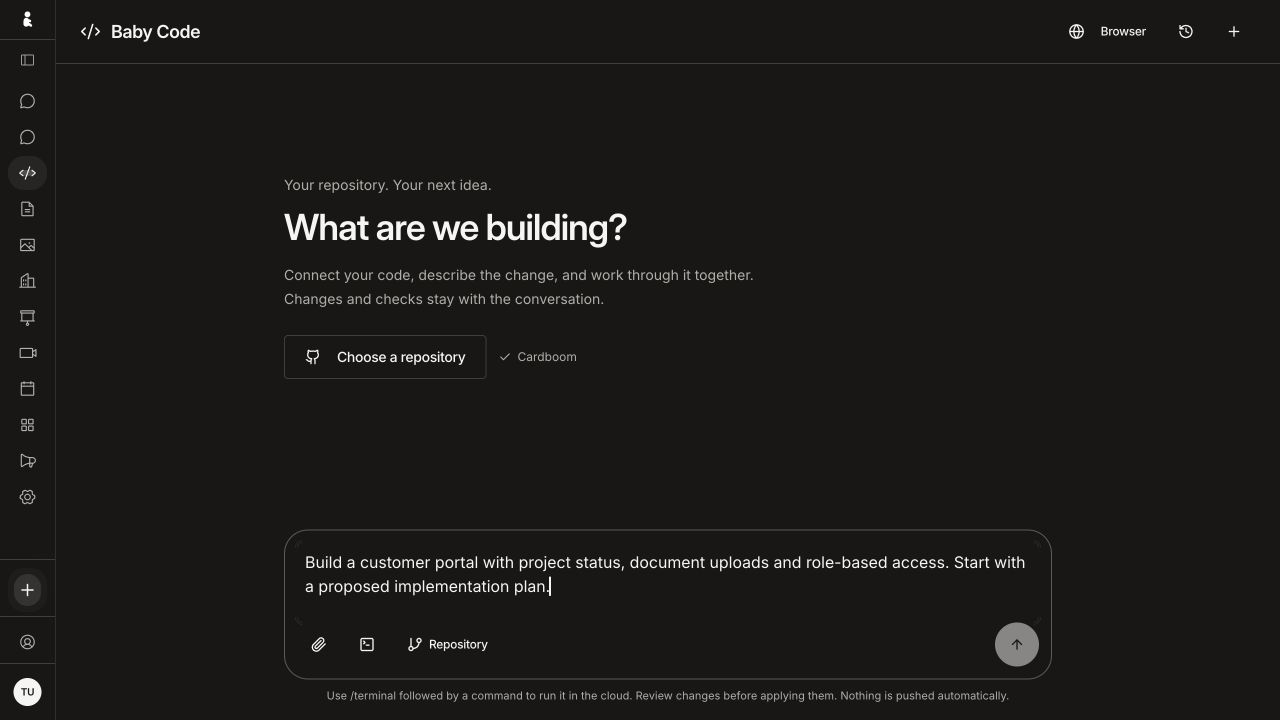
Brainbaby AI
See how Brainbaby gives coding and presentation work their own browser workspaces.
Catalogues and connected systems
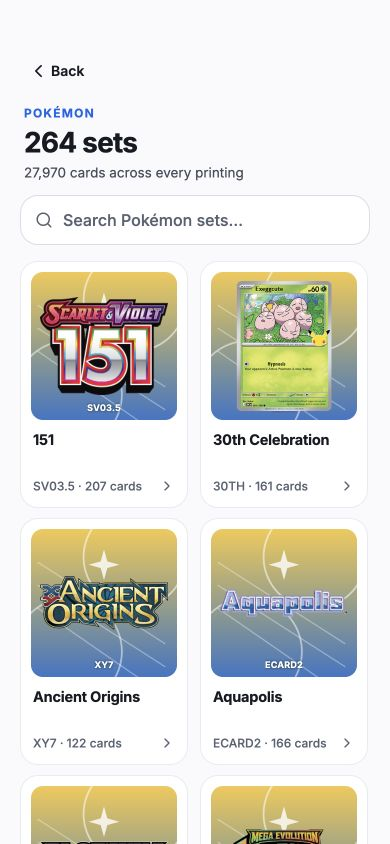
Cardboom
Explore Cardboom’s catalogue journey and the engineering decisions behind its collector tools.
These are owned-product examples. Screens show the documented interface versions; the case studies explain their capture context and the scope of the engineering review.
2. Design: review the journey and its difficult states
Map the steps before treating individual screens as finished. Review navigation, input, permissions, loading, empty results, errors and recovery. Include text scaling, screen-reader order, keyboard behavior and motion preferences. Prototype the uncertain interactions and use feedback to refine them.
A real screen gives a buyer something concrete to discuss. Baby Astro’s mobile interface, Brainbaby’s native onboarding and Cardboom’s catalogue each illustrate different design decisions in our portfolio. Their case studies identify the capture context. Screenshots show a recorded interface; testing an interactive journey establishes different evidence.
The portfolio also retains the supplied Go To Syria and Wasel screens for travel and logistics design discussions. Their capture dates and current service availability are unverified; review those examples with the team before treating the displayed workflows as a current release.
3. Development: connect mobile, web and backend work
Choose the implementation against the product’s needs and the team’s ability to maintain it. Define the API contracts, account access, data ownership and failure behavior before parallel work starts. The mobile app may need an administration portal, a customer website, background processing or an integration with an existing business system.
Deliver bounded journeys that can be reviewed against the agreed criteria. Record the application revision and test environment, and keep provider credentials and privileged operations behind appropriate server controls. The scope should name who maintains the mobile build, the web tools and the infrastructure rather than treating the app as an isolated set of screens.
4. Testing: agree the evidence for release readiness
Specify supported devices and operating systems, representative data, key journeys and the failure cases that need testing. Include interrupted connections, denied permissions, repeated actions and expired sessions where they affect the product. Agree the performance and accessibility checks appropriate to the release.
Keep simulator tests, physical-device checks, backend tests and public-service verification distinct. A passing source test does not establish that an external payment or notification service is configured correctly. A screenshot does not prove account access. Record the build, environment, result and remaining issues so acceptance is based on evidence rather than the appearance of a demo.
5. Store submission: prepare access, metadata and responsibilities
Before submission, agree who owns developer accounts, signing access, store metadata, support contacts and review responses. Apple’s guidance calls for a tested app, accurate information, review access and available backend services. Google Play’s preparation guidance covers declarations and the access reviewers need. Check the current requirements for the app’s actual features.
Treat a tested build, a store submission, an approval and a public listing as separate milestones. Cardboom’s public Google Play listing identifies Brainbaby Labs as publisher and provides store screenshots; it does not establish that every local preview on our site is included in that store version. Store review decisions and timing remain outside a delivery team’s control.
6. After release: hand over ownership and plan support
Document access to the repository, build process, provider accounts, environments and operational tools. Agree how the team investigates crashes, handles support reports, monitors relevant service failures and reviews dependency or platform updates. Name the person who can approve a release or restore service.
Separate defect resolution, maintenance and new features in the support agreement. Review actual user feedback and measured behavior before expanding the roadmap. Share your proposed journey, existing systems and constraints with Brainbaby Labs so the first engagement can include the mobile, web and infrastructure responsibilities your product needs.