Owned product / Mobile game engineering
Craze City. Building a city people can play in.
Craze City is Brainbaby Labs’ mobile life-simulation project in development. Its product scope brings an open city, jobs, businesses, vehicles, property and events together. The engineering challenge connects the game people see with the rules, records and operational systems behind it.
Discuss a simulation or infrastructure project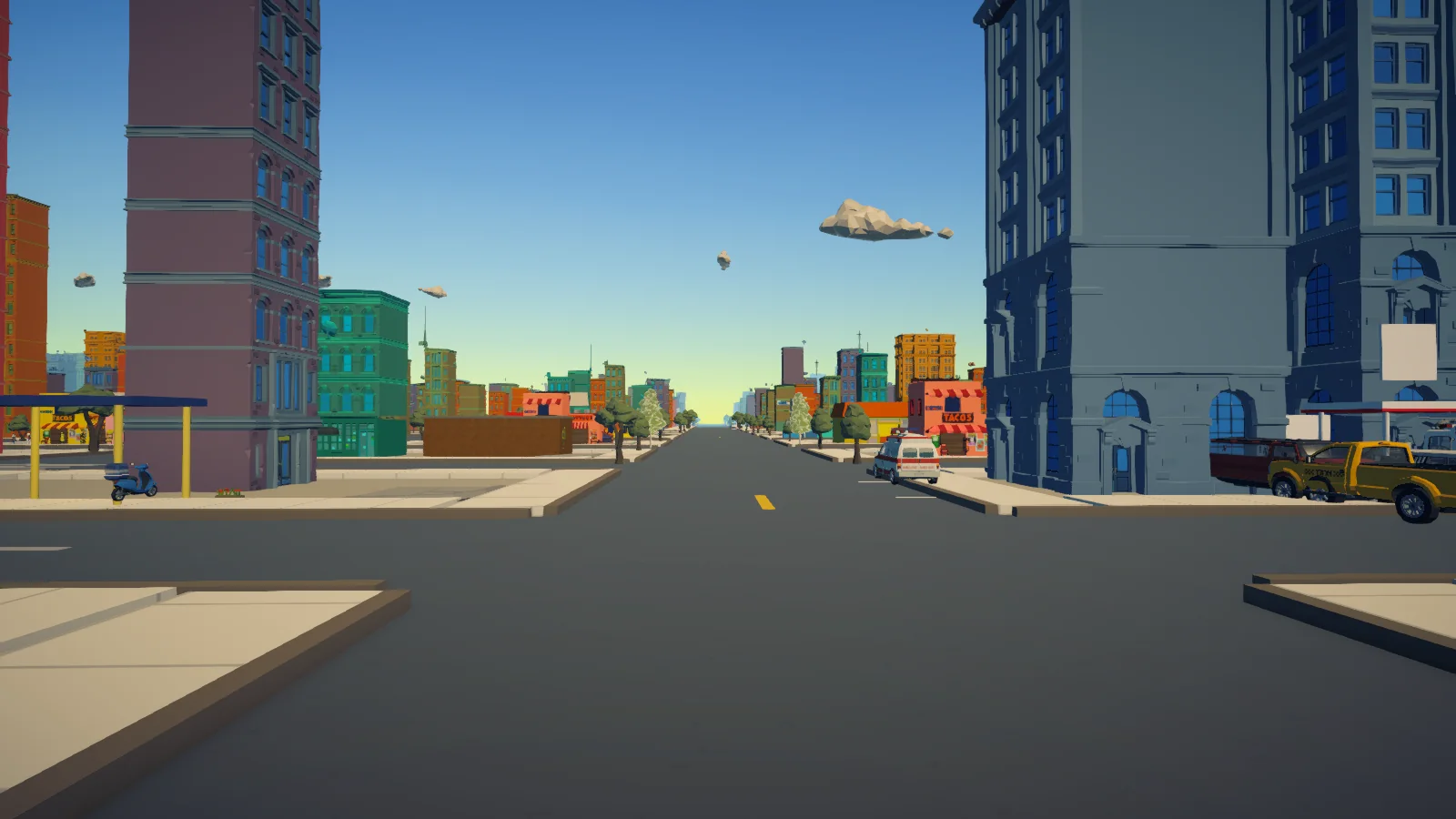 In development
Unity / Client / Server
Follow a cosmetic purchase through the system.
A reviewed development implementation shows why a purchase is more than a button. Explore the responsibilities in this simplified example; the diagram makes no server calls.
Player request
The client requests an item and action. The server-facing request path checks the sender, account and shop proximity before attempting settlement. The client does not choose the price.
Server checks
The settlement code reads the catalogue price, validates the account record, checks ownership and verifies available funds. A repeated buy for an already-owned item returns ownership instead of charging again.
Save result
Balance, ownership and equipped state are updated together through a commit callback. If that commit fails or throws, the previous values are restored and the operation reports unavailable.
Client feedback
The result distinguishes purchased, already owned, equipped and failure states. Release review should test the displayed result, duplicate requests, interrupted saves and a fresh reconnect.
All four explanations are available below. This is one source-reviewed purchase path, not a statement that every game system uses the same design.
A connected simulation needs clear boundaries.
The reviewed project contains Unity gameplay and networking code alongside separate game-host and account/save operations. Game state and account records have different responsibilities. The player experience, server decisions and persistence need to be scoped together; an interface alone does not prove a working persistent multiplayer world.
Plan the release and the operation together.
The networking source includes build and protocol compatibility checks. Operational material covers deployment, rollback and backups. These are concrete engineering areas to review for a simulation project. Real-device performance, concurrency, recovery and live capacity still need their own current runtime evidence before a launch or service commitment.
Bring these questions to a game or infrastructure brief.
- Which actions must the server approve, and what should happen when a player repeats a request?
- What survives a logout or server restart, and how will we demonstrate that recovery?
- Which devices, network conditions and concurrent-player targets will the release actually test?
Basis: development source reviewed 3 October 2026 and an existing game capture. Craze City is in development. This page does not establish launch readiness, tested player capacity or a client-project outcome.